Choosing a D-Lock for Everyday Cycling
By VeloCarry Editorial. Updated: 10 November 2026.
Quick answer
- Who it's for
- Riders who lock their bike at work, at a station or on the street.
- How to choose
- Choose for your riskiest parking spot. Check the shackle fits around the frame and anchor.
- Watch out for
- Check your insurer’s required rating and the exact lock model before you buy.
A lock is the least glamorous purchase in cycling and the one with the most direct financial consequences. This guide sets out how to choose a D-lock for the realities of UK commuting: where the bike is parked, for how long, and what your insurer requires.
Buy for where the bike actually sleeps
The lock that matters is the one used overnight. Work parking behind a locked door needs less than a street railing. Rate your worst-case parking first:
- Inside at home and at work: a mid-weight D-lock for public quick stops may be enough.
- Secure-but-shared parking (bike sheds, stations): Sold Secure Gold territory.
- Street parking overnight in a city: Diamond-rated, and accept that no lock is absolute — layers and insurance matter more.
Read the ratings, then read your insurance
Sold Secure grades locks Diamond, Gold and Silver after physical attack testing (there is also an ART scheme used more in mainland Europe). The rating is the only widely-available, independent yardstick in the UK — and it is exactly what insurers reference. Two things to check before buying:
- Your policy's minimum rating and any exclusions (anchoring, time limits, "gold-rated lock" wording).
- The lock's current certification on the tester's own product search, not the retailer's badge — ratings are re-issued per model version.
Practical selection criteria
- Weight vs security: carrying 1.5–2 kg of D-lock is normal for commuters; frame-mount brackets make it tolerable. Beyond that, people leave them behind.
- Shackle length: long enough to reach frame + wheel + anchor on the objects you actually lock to. Too short is the most common regret.
- Key vs combination: keys survive mud and rain better; combos are kinder to the forgetful — pick your failure mode.
- Secondary lock: a compact cable or second lock for the front wheel and saddle raises the effort needed beyond opportunism.
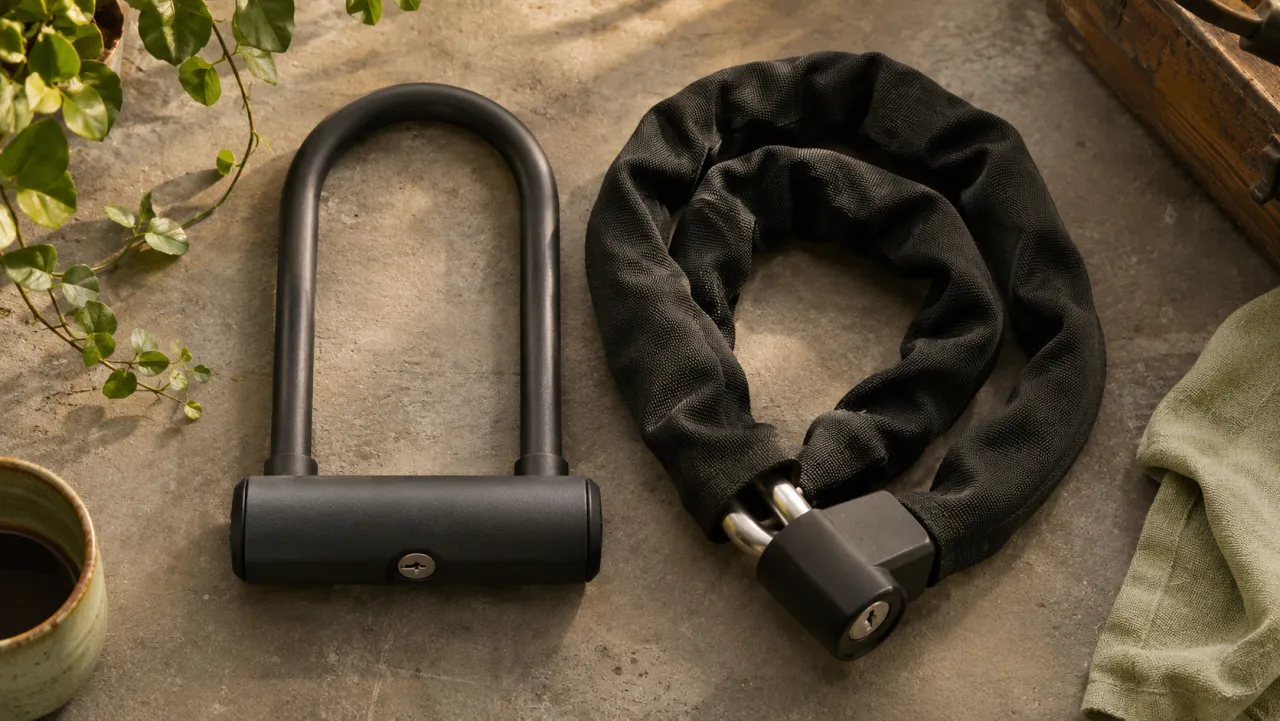
For how D-locks compare with chains and when each wins, see D-lock vs chain lock.
Where this fits in the VeloCarry method
Locks will join the site in the locks category only with verified ratings, weights and dimensions sourced from manufacturers and retailers — the same evidence rules as our pannier research. Until data is verified the category stays honestly empty, and no lock will be called "unbreakable" by us, ever. Security also shares space with visibility and carrying decisions on the commuting hub.
Frequently asked questions
What Sold Secure rating do I need?
Sold Secure tests locks at Diamond, Gold and Silver levels. Many insurers require Gold (sometimes Diamond) for overnight street parking in higher-risk areas. Check your policy's exact wording before buying — a cheaper lock that voids your insurance is not cheaper.
Is a bigger, heavier lock always better?
No. A lock too heavy to carry gets left at home, and the best lock is the one that is actually on the bike. Match the lock to where the bike actually sleeps, and consider a secondary cable for quick stops.
Can one lock secure both wheels and the frame?
If the lock is long enough to catch the frame, rear wheel and a secure anchor, yes. Otherwise lock the frame and use security skewers or a secondary cable for wheels and saddle.