Lezyne Femto USB-C Front & Rear Light Set
Commuters on lit city streets who want a charge-anywhere be-seen set
- 50 lm front / 15 lm rear in day flash
- USB-C (both lights)
- IPX7
Ad / Affiliate links: We may earn a commission at no extra cost to you.
Showing 9 of 9 products
Commuters on lit city streets who want a charge-anywhere be-seen set

First light set for a new commuter

Front light for mixed lit and unlit stretches
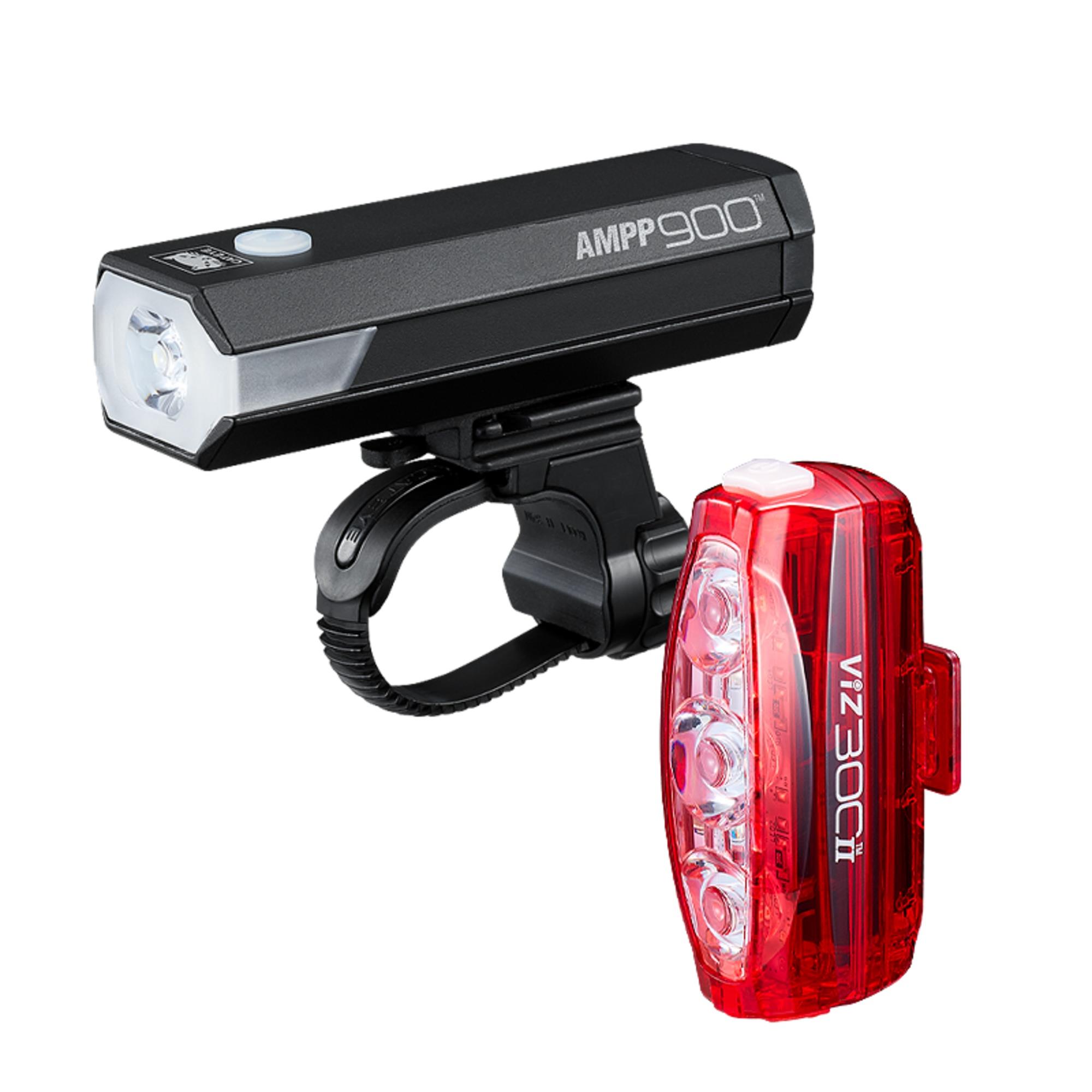
One-box winter commuting setup

Design-conscious commuters

Dark-road commuters who want a strong rear

Regular unlit-path commuting

Premium front light for fully unlit routes

Commuters on fast rural A-roads
Last updated 13 November 2026.
Lumens measure brightness — more lumens, more light. An IP rating (like IPX6) shows how well a light copes with rain.
On a street-lit commute, focus on visibility from the side, an easy-to-reach switch and a rear light your coat or pannier cannot cover. For unlit towpaths and lanes, prioritise a steady front beam with enough reach to spot potholes at your riding speed. Point the light down and check its aim while the bike is loaded. A narrow beam and a wide beam can feel very different at the same lumen rating.
Start with the length of both legs of your commute and allow for delays or a missed charge. The CatEye AMPP500S is rated for 90 minutes at 500 lm and three hours at 250 lm. The AMPP1300 is rated for two hours at 1,300 lm and 3.5 hours at 600 lm. Compare these mode-specific figures when deciding whether a larger light earns its place on the handlebar.
Match the mount to your handlebar or seatpost. Leave space for a bell and cables, and check rear visibility with the rack loaded. If you remove your lights when parking, make sure the release is easy to operate with gloves. A shared USB-C cable can simplify charging both ends of the bike. Check the published water-resistance rating and close any charging-port cover before riding in rain.
For front-and-rear pairings and night-riding rules, see the winter commuting light guide. Product pages show manufacturer specifications where available, alongside retailer listings and price check dates.